
The Fantastical, Aggravating Life of Doña Pola
Guest author M. Guerra recalls the long, strange life of Doña Pola, who cleaned her grandparents' house, took the coyote cure, and followed a faith known only to her.
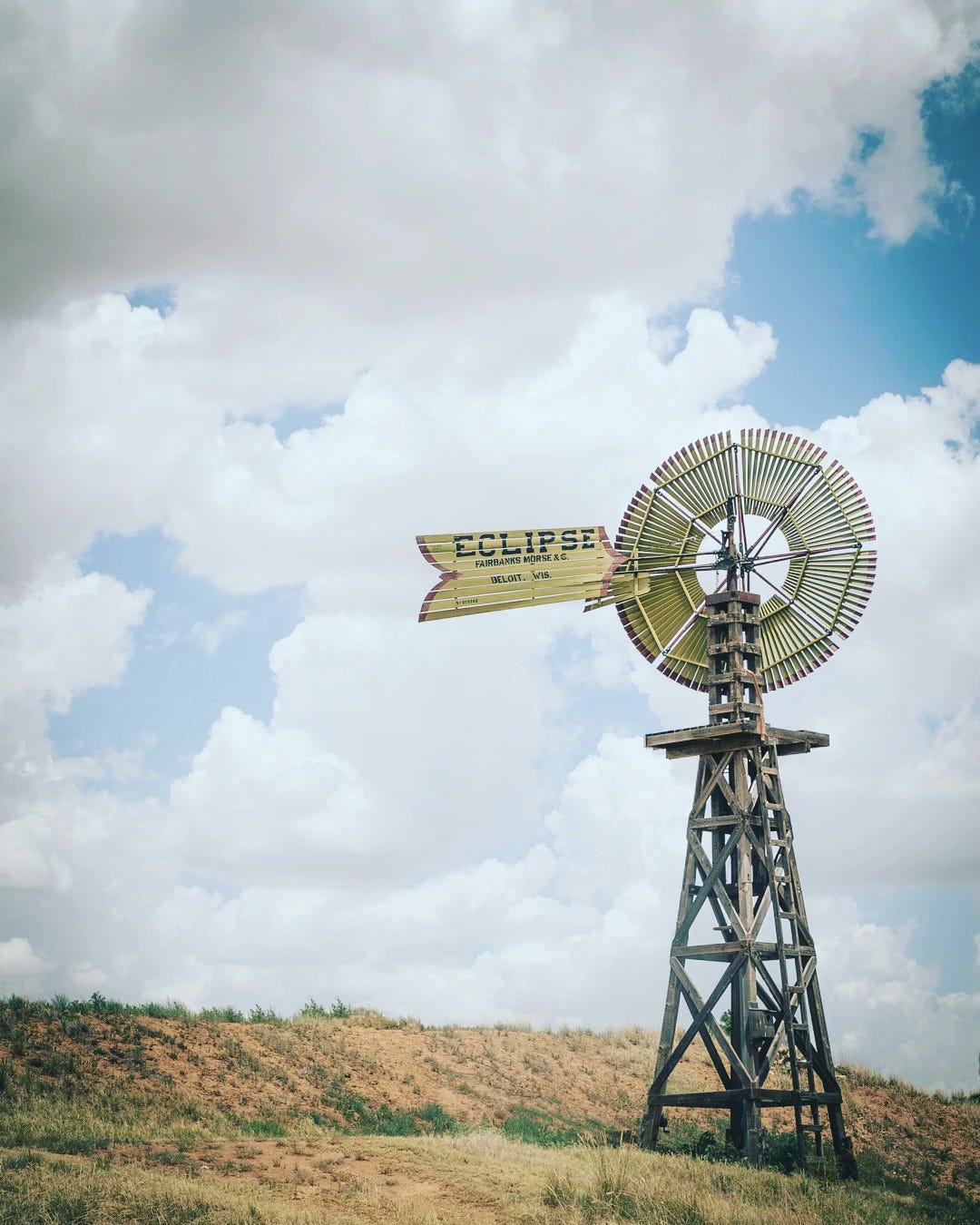
Wearing a mustard brown woolen cap pulled down around her ears, a hand crocheted maroon and grey muffler pulled up to the bifocals, a pilled cardigan, and white knee socks under her thin poplin pants, she would take her summertime evening walks down the dusty country road. She never wore skirts because men were always looking up them.
Or so she said.
Doña Pola insisted that she needed to bundle up against the resfrios y reumas that you could catch from a summer evening breeze or artificial air-conditioning. Her solid belly and thin legs made her head look even smaller. Her hard-black eyes glistened and darted with madness. She would clutch the walking stick she had picked up from the wood pile, and my grandfather’s hunting dog would trot after her as she slowly walked her usual circuit.
Doña Pola had worked as a housekeeper in South Texas since the 1960’s but went to work for my grandmother in the early 1970’s. Living in a rural area, my grandparents’ ranch house was the center stage of family activity – in our cast of uncomfortable characters I played the archetypal morose teenager, while Doña Pola inhabited the role of sacred innocent. Originally from Panales in the state of Mexico, I didn’t know much about Doña Pola’s family or personal life. Occasionally she mentioned her son who lived in Chicago. She spoke of him with quiet pride. Other people who knew Doña Pola said she sent him all of her money, but they also said that her son was no good.
Maybe at this part of the story you expect for me to say that I loved Doña Pola. That she was endearing, or kind, or wise. But none of those heart-warming thoughts or projected stories of comforting friendship would be true. She was not kind. I was never happy to see her because it was awkward to listen to her ailments and the bizarre sounding cures she conjured. She gossiped. If she felt your disrespect, she would fold your up and put you away into a tidy closet of icy scorn, stacked in piles with other people who had offended her in the past.
Like the time our neighbor Mateo saw her at the mall, holding hands and strolling with Jorge the carpenter. Jorge was quiet and had a wife and family. He brought his son with him to work the odd repair jobs. Doña Pola would visit with Jorge as he nailed fresh boards onto the base of the chicken coop or patched the tin roof of the doghouse. She would spend hours talking to him about her ailments, her cooking, her family in Panales, and her son in Chicago. Jorge would simply nod and smile. He listened to her, and that is what made him golden. Jorge was good to her.
But I think they were more than just friends.
In retrospect, I’m glad she had some love in her life, but as for Mateo…he was banished to the frozen center of Hell for eternity. He had invaded Doña Pola’s privacy; the kind of privacy country people crave when they go to town. At the mall, she was enjoying anonymity in a crowd of random people. She presumed Mateo would gossip about her to other neighbors (of course, he did.) and gossiping about her was absolutely unforgiveable.
Other folks usually brushed away Doña Pola’s buzzing words, like shooing away an annoying housefly. I confess I can’t remember the exact sentences she compiled, or the words of advice she was desperate to share. The chaos from her mind tumbled out in a verbal jumble. Maybe mixing up her words and building a barrier of confusion around herself was how she kept her privacy. I watched her, but I rarely wanted to talk to her. Her words were too much.
Like the time she cornered me in the kitchen to tell me about her troubles with boiled potatoes. “Se me hacen muncho daño. ¡Muncho!” (In the vernacular of Doña Pola, “mucho” was always pronounced with an added “n,” as if a regular “mucho” just wasn’t enough.) With gravity and great concern, she lowered her voice and disclosed that boiled potatoes made her hands shake with anxiety. “¡Mira!” she exclaimed as she fixed her hard eyes on her outstretched right hand. It quavered as if she was desperately trying a locked, invisible doorknob. The hard-black eyes under her mustard cap flicked towards mine, and then back to her outstretched hand with dread and concern.
I made a mental note to never serve her boiled potatoes.
What aggravated me the most about Doña Pola was that her beliefs always rested in an authority other than her own common sense. Like the time the discount dentist in San Pedro convinced her to remove all of her natural teeth, both upper and lower. He told Doña Pola that the dentures he could sell her were far better than her natural teeth and required less maintenance.
Or at least this is what Doña Pola told my grandmother.
Dismayed, my grandmother told me of Doña Pola’s plan, and there was no talking Doña Pola out of it. When she returned from her appointment in San Pedro, Doña Pola’s new dentures included decorative gold crowns around the incisors.
They were top notch.
Removing your natural teeth decreases your desire to eat is what my high-school world history teacher told me after his teeth were removed. He withered away in front of us, from a robust British army captain who fought against Rommel, to a small-framed Englishman in a worn, oversized tweed jacket that seemed to be eating him up, bite by bite.
So I knew what would happen to Doña Pola. Soon after her teeth were removed, she lost 30 pounds. Doña Pola bought smaller poplin pants, confident that her teeth were indeed improved.
But sometimes Doña Pola wouldn’t wear her teeth. Her new dentures were uncomfortable. She was the first person I ever saw with bare gums. On her days off she would stop by my grandparent’s kitchen and want to talk to me, as if not wearing her dentures were no big deal, like not wearing her glasses or her pill-infested sweater.
But it was a big deal.
When she didn’t wear her dentures, her nose drooped over her top lip and her eyes seemed bigger, harder, and goggled at you with a quality of stark desperation. Without her teeth, her mouth became a spooky black cavern, crammed with the ghosts of missing teeth, lisping unfunny jokes that I didn’t want to hear. A harbinger of my future, the oracle of old age, her gummy grinning maw made me cringe and look away. Doña Pola became my personal patron saint of religious daily flossing.
Years later, as I sat in the dentist’s chair in San Antonio and the doctor rattled off his sales pitch about cosmetic porcelain veneers with an easy payment plan, I wonder what made me so different from Doña Pola.
I did not know if Doña Pola went to a bonafide church, but she had great faith in curanderos, the local healers who use faith, homeopathy, herbalism, prayer and personal conviction to cure the afflicted. Doña Pola piqued everyone’s interest in curanderismo, the art and science of the curandero. She practiced her own amateur version in her squatty white clapboard house, but visited the professionals when she went to town.
One day, Doña Pola asked one of her neighbors to hunt and kill a coyote for her. When he asked why, she responded, “For my arthritis.” He scratched his head, but he had known her a long time, and out of respect for her age, he brought her one. Happily, she took the carcass into her home, skinned, gutted and butchered it, and soon had small strips of meat hanging from her clothesline. Resembling scabs dripping from a wire, the coyote meat dried in the sun, while the fat from the meat dripped into a pan on a small table underneath.
According to Doña Pola, coyote fat had great medicinal qualities, but we weren’t sure if she rubbed the fat on her aching joints, or if she used the grease for cooking. Or perhaps she made some sort of guisado with the jerked coyote meat. We didn’t know. No one was brave enough to ask Doña Pola about her method of treatment, or recipe for carne guisada de coyote. And no one was willing to listen to her ersatz explanations. Wouldn’t a tube of Ben-Gay from the drug store have been more convenient? Although she never asked for another coyote, Doña Pola never again complained about her arthritis either.
This was not the first time I had seen curanderismo in action. Growing up in rural Texas, I saw many attempts at home cures that seemed simultaneously unconventional, yet remotely plausible. Glass marbles were many times bandaged into umbilical stumps for proper healing after babies were born. Warm comforting teas were brewed of chamomile, eucalyptus or cinnamon whenever anyone needed to calm the stomach. The obligation of laying hands on babies’ heads so not to give them “el ojo” or the “evil eye” happened every time I took my toddler sons to the supermarket in town. When we visited, Doña Pola always laid her hands on me and my children too, as the “evil eye” was her most serious concern. Some acts of faith related health practices are innocuous, but like the coyote meat, some practices could be peculiar or worrisome.
Doña Pola had many afflictions. Boiled potatoes made her hands tremble, and she said at night she could see blue flames hovering in the grass of her garden that marked where treasure was buried. Her ailments required constant vigilance, so she lived in perpetual prayer. When my grandmother sent me to deliver something to Doña Pola’s house, her round form would appear at her screen door, illuminated by an aura of golden candlelight behind her. She kept a crystal rosary in the hip pocket of her embroidered apron and prayer cards of local faith healers such as El Niño Fidencio and Don Pedrito Jaramillo tacked on her kitchen wall. Her afflictions were relieved by dynamic spiritual experiences, not by flat dull words from doctors educated by dusty medical books. She lived in the world of the curandero – a very real world of charismatic, mysterious faith. And in our part of South Texas, she was not alone.
When Western medicine is not affordable, or perhaps your family has doubts about relinquishing themselves to a conventional hospital, curanderismo provides relief for maladies both physical and emotional. But understanding the philosophy and variations of curanderismo can be confusing to those who are unfamiliar with it, looking at the practice from outside the culture. The temptation may be to mock or dismiss the cures or the curanderos. But faith in all of its forms deserves respect, understanding and tolerance, philosophies which we seem to automatically grant to Western medicine and Judeo-Christian practices. Even though we may never be able to fully reveal its mysteries, curanderismo deserves our understanding.
In retrospect, it wasn’t that I doubted the ways of the curandero. I simply doubted the ways of Doña Pola. Doña Pola was not a professional practitioner of curanderismo. She wasn’t part of any curandero network, and she certainly didn’t go on sabbaticals for continuing education. She was an amateur, with only her past experience in Panales and her occasional consultations with local curanderos as her reference points for remedies. Was this coyote meat home remedy traditional, or her own innovation? Or had she been taking the coyote meat treatment in town with a professional curandero, and this was her only attempt to recreate its effects at home?
Sabrá Dios (Only God knows.)
Relating to Doña Pola day to day in the routine of my grandparent’s household was complicated. Her mind listened to the music of spheres, the celestial planets and voiced messages that only the intended recipient can hear. She had their volume turned way up, so much so that she couldn’t hear what the real people around her were saying. She listened to the ancient healers, and followed their advice, followed their seemingly illogical equations based on what she thought she heard. But I couldn’t follow her. She was following what she believed to be tradition.
Traditions on their own can seem outmoded and primitive, but in this world where we try to follow science or mathematical logic, faith brings comfort where technology cannot. We can try to find logical answers, similar to solving algebraic equations. We add our own variables and come up with different solutions. Ultimately, we have to take that leap of faith into an abyss of the unknown. Maybe Doña Pola drove me crazy because she followed no logical path, but in retrospect, perhaps she simply leapt over logic, and went straight to faith. Doña Pola followed what her heart told her, placing her trust in the traditions she knew. But Doña Pola worked outside of logic. Only God knows what will be, if you believe.
Sabrá Dios.
At the end of my grandfather’s life, after my grandmother died, Doña Pola became his caregiver. She may have been crazy, but Doña Pola was saintly crazy. She helped him with his meals, bathing, and walking from his bedroom to his living room when his family could not or would not be there. Doña Pola and my grandfather were both difficult people. But they understood each other and deeply mourned my grandmother together. Nothing in life is perfect and my grandfather and Doña Pola were imperfect together.
I was glad she was there.
After my grandfather died, Doña Pola helped us clean the house, but she had also decided that it was time for her to retire. She told my father that she would leave after the house was settled. She wanted to spend more time with her family and friends, who cared for her deeply in spite of her eccentricities. As we sorted through my grandmother’s personal belongings, Doña Pola asked for something of my grandmother’s as a memento. I gave her my grandmother’s ruby earrings and she accepted them quietly. Saying goodbye to loved ones has a logical pattern of sorrow and grief, but the last visits with Doña Pola were as confusing as any other day with her. She packed up her belongings, and Jorge drove her away in his beat-up Silverado.
In later years, Doña Pola’s friend Blanca would bring her to my retail store to visit, and Doña Pola would sell me embroidered mantelitos with hand crocheted edges that she made as decorative tortilla warmers. I sold a few to my customers, but mostly I hoarded these old-fashioned pieces of needlework. She never asked very much for them, so I always paid her double. I imagine Doña Pola sent the money to her son.
In fact, during our last visit, she told me she was moving to Chicago to be with him. And just like that, I never saw her again. I wondered if she walked around the Windy City with an upcycled walking stick, her scrambled maroon yarn muffler pulled up to her glasses, and her mustard cap pulled down to her nose. I wondered if Doña Pola made pan de polvo cookies for her son, or brewed pineapple tepache in the summer, the way she did for my grandparents. I still make pan de polvo and tepache with her recipes.
A year after she moved to Chicago, I heard through the grapevine that Doña Pola had passed away. Her son must have grown weary of listening to her jumbled words. It had been a long time since he had spent conversational space with her, so he sent her back to Panales, the city that she had left over forty years ago. She died there, but I wonder where and with whom. Did anyone listen to her complaints about her aches and pains? Did someone take care of her the way she took care of my grandfather? Did someone hold her hand the way Jorge did, or allow her to lay hands on their children to bless them and keep them from evil? No one could tell me that part of her story.
I wonder if one of her many ailments ended her life. Was it a resfrio, or a reuma? After a lifetime of defending her health, I wondered why she let down her guard. Perhaps she lost her mustard cap in the snow, or maybe her dentures gave her problems and her poplin pants became too large again. Did anyone stop to listen to what she was saying, or try to untangle her words to understand what she needed?
Or maybe it was her heart.
Sabrá Dios.
M. Guerra lives on a ranch in South Texas, near where she was born and raised.
Images:
“Eclipse” by M. Guerra
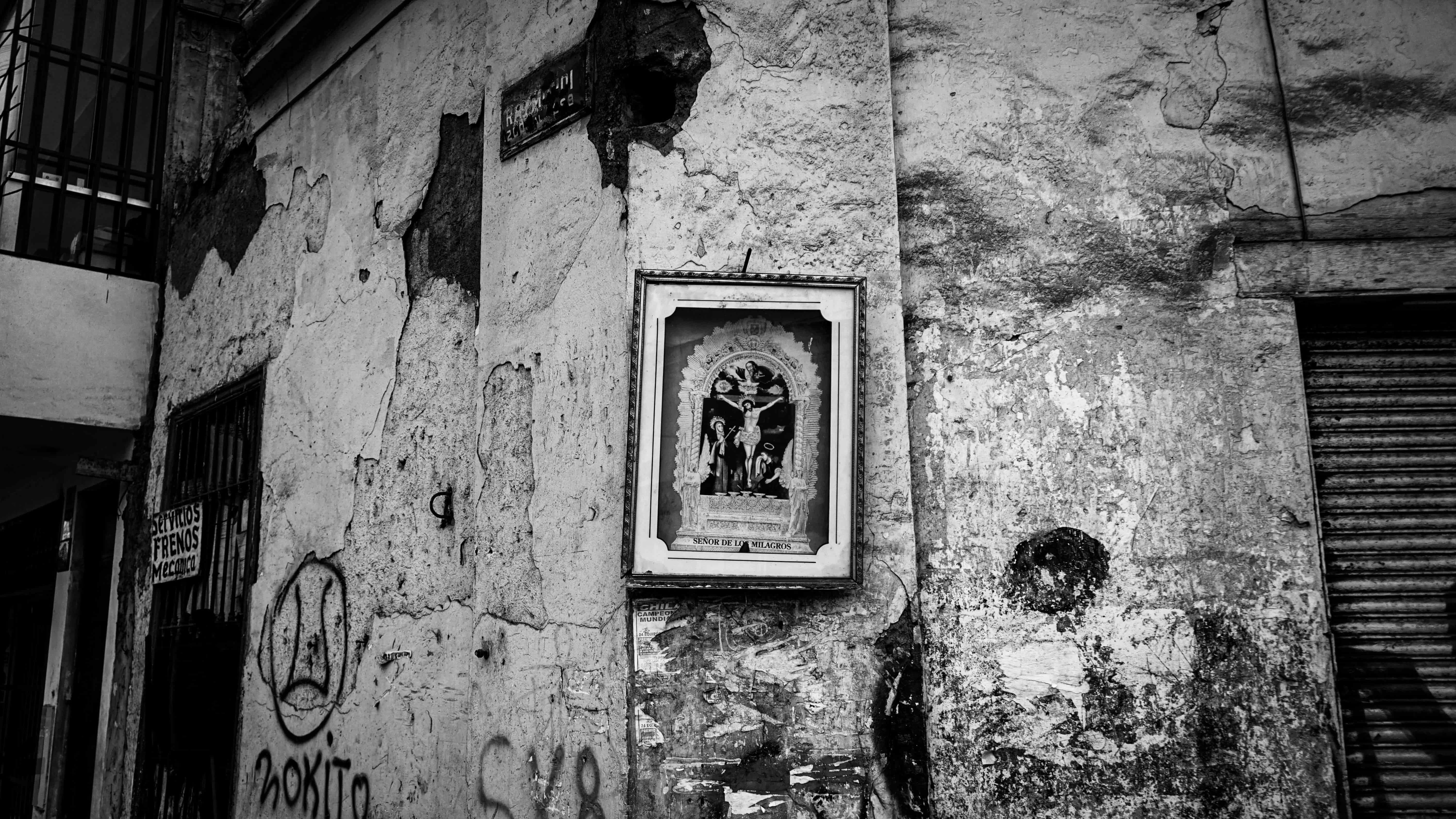
Street altar by Salvador Landeo Choy
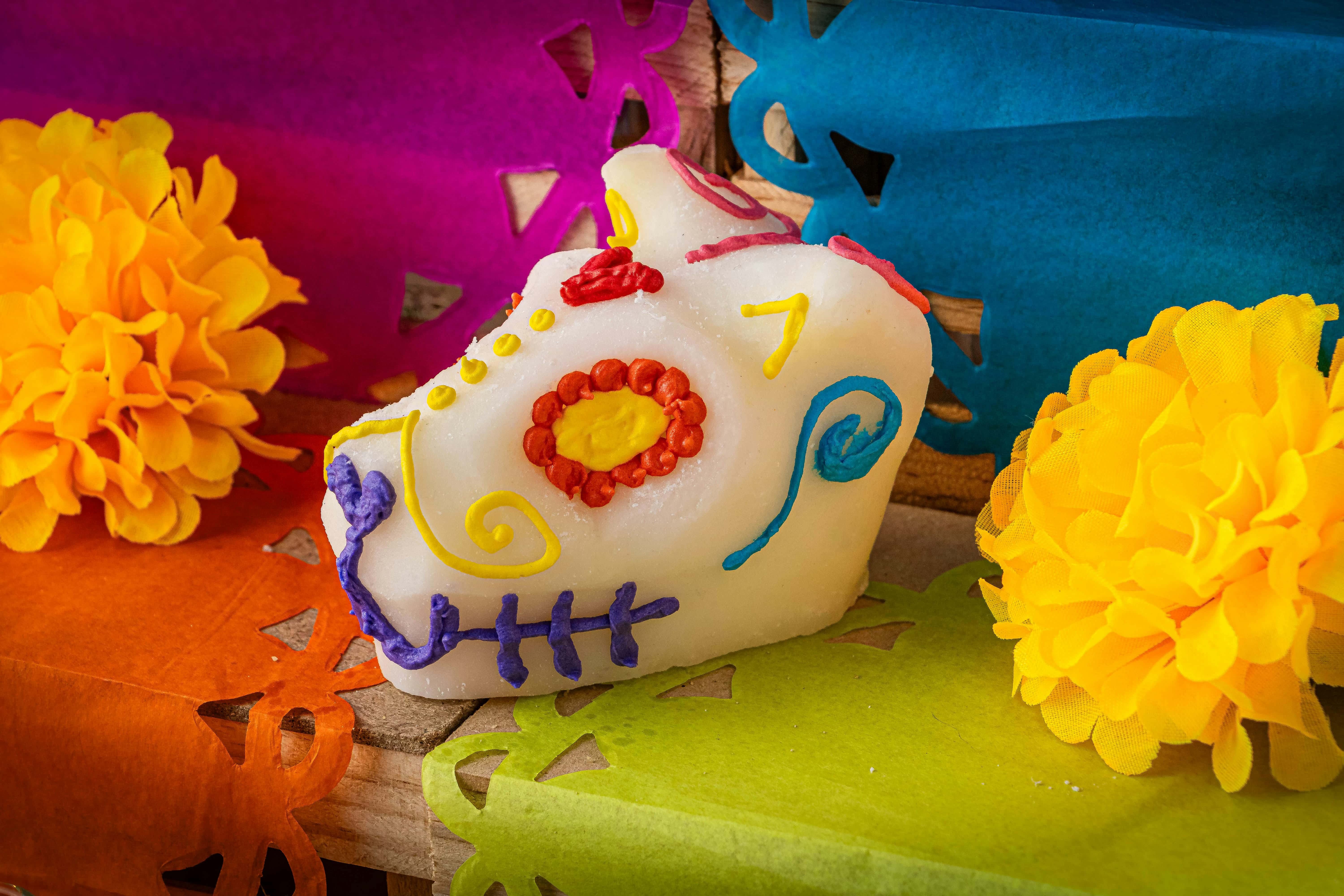
Coyote cake by Maryam Sicard
Greetings Jean, I hope you’re well.
Your posts appears on my feed quite a lot, there enjoyable to read, thank you.
You may enjoy what I share, a philosophic and modern look at obscured histories and ideology’s.
Here’s my latest:
https://open.substack.com/pub/jordannuttall/p/secrets-and-remedies-from-the-renaissance?r=4f55i2&utm_medium=ios